
An On-Grid Solar System, also known as a Grid-Tied Solar System, is one of the most popular and cost-effective solar power solutions for homes and businesses. This system is directly connected to the local electricity grid, allowing you to generate clean solar energy during the day and draw power from the grid whenever needed. It significantly reduces electricity bills and ensures a reliable power supply without requiring battery storage.
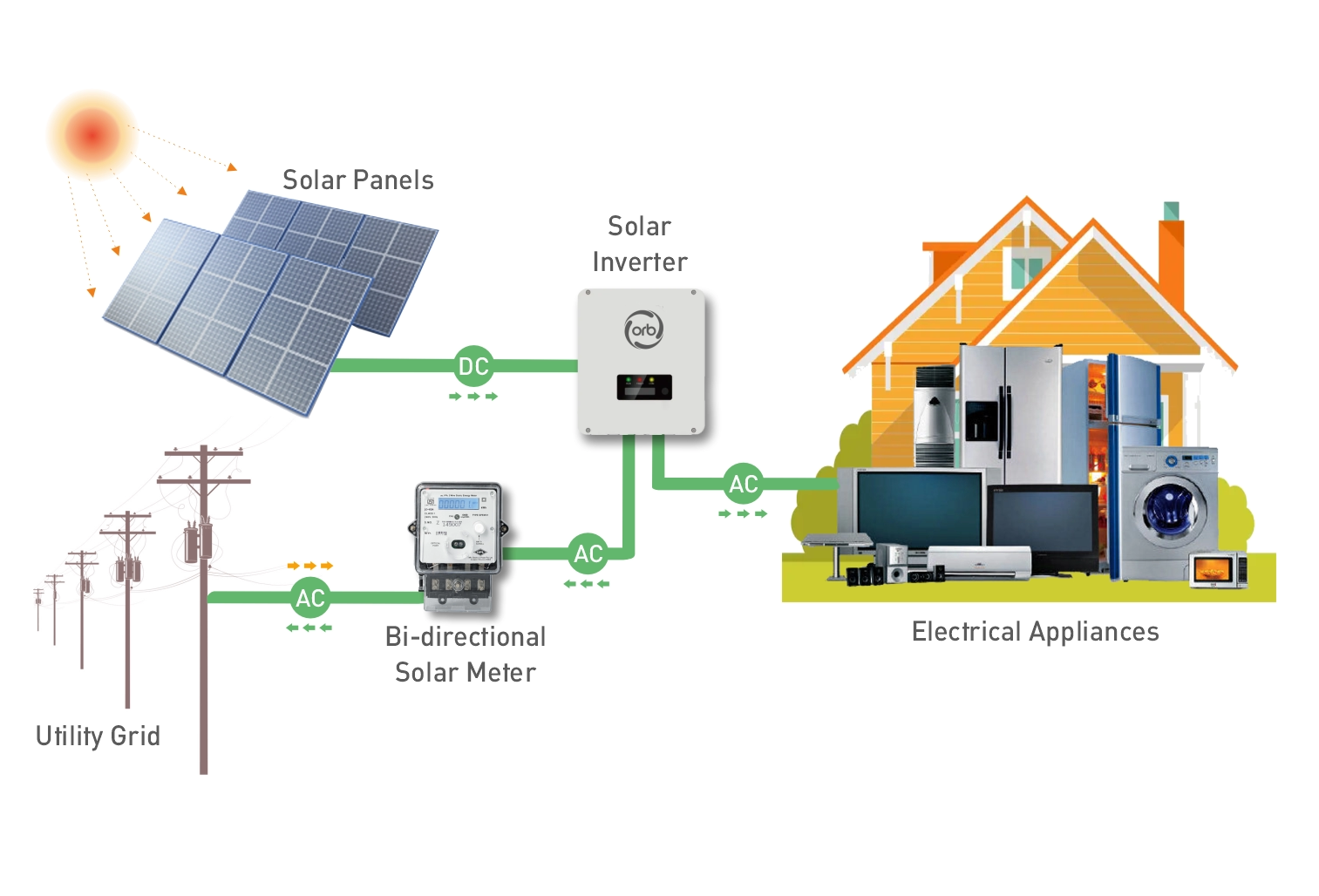
The electricity generated by solar panels is converted into usable AC power through a solar inverter and supplied to your home or commercial establishment. Any surplus energy produced is exported back to the grid, helping you earn credits through a net metering system.
On-grid solar systems operate by converting sunlight into usable electricity. The solar panels absorb sunlight and generate Direct Current (DC). This DC power is then converted into Alternating Current (AC) by a solar inverter, making it compatible with household appliances.
The converted electricity is used to power your electrical devices in real time. If your solar system produces more power than required, the extra energy is automatically fed back into the utility grid through a net meter. The net meter records both imported and exported units, allowing consumers to pay only for the net electricity consumed at the end of the billing cycle.

Reduces carbon footprint by using clean, renewable solar energy.

Lower electricity bills and long-term financial benefits.

No batteries required, ensuring minimal maintenance costs.

Seamless power supply with grid backup during low solar generation.

Earn credits for excess electricity exported to the grid.

Easy to expand capacity as your energy needs grow.
1. Reduced Electricity Bills – By generating your own solar power, you reduce dependency on the grid and save significantly on monthly electricity bills.
2. No Battery Investment Required – Since the system is connected to the grid, there is no need for expensive battery storage, reducing overall cost.
3. Faster Return on Investment – Lower installation and maintenance costs ensure quicker payback and long-term savings.
4. Government Incentives & Net Metering – Many regions offer net metering and subsidies, making on-grid systems more affordable.
5. Environment Friendly – Helps reduce greenhouse gas emissions and supports sustainable energy goals.
