
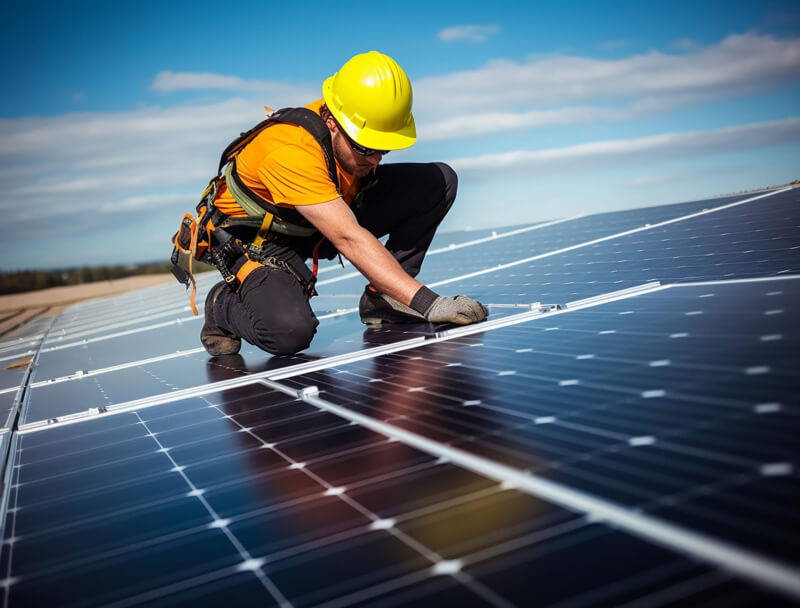
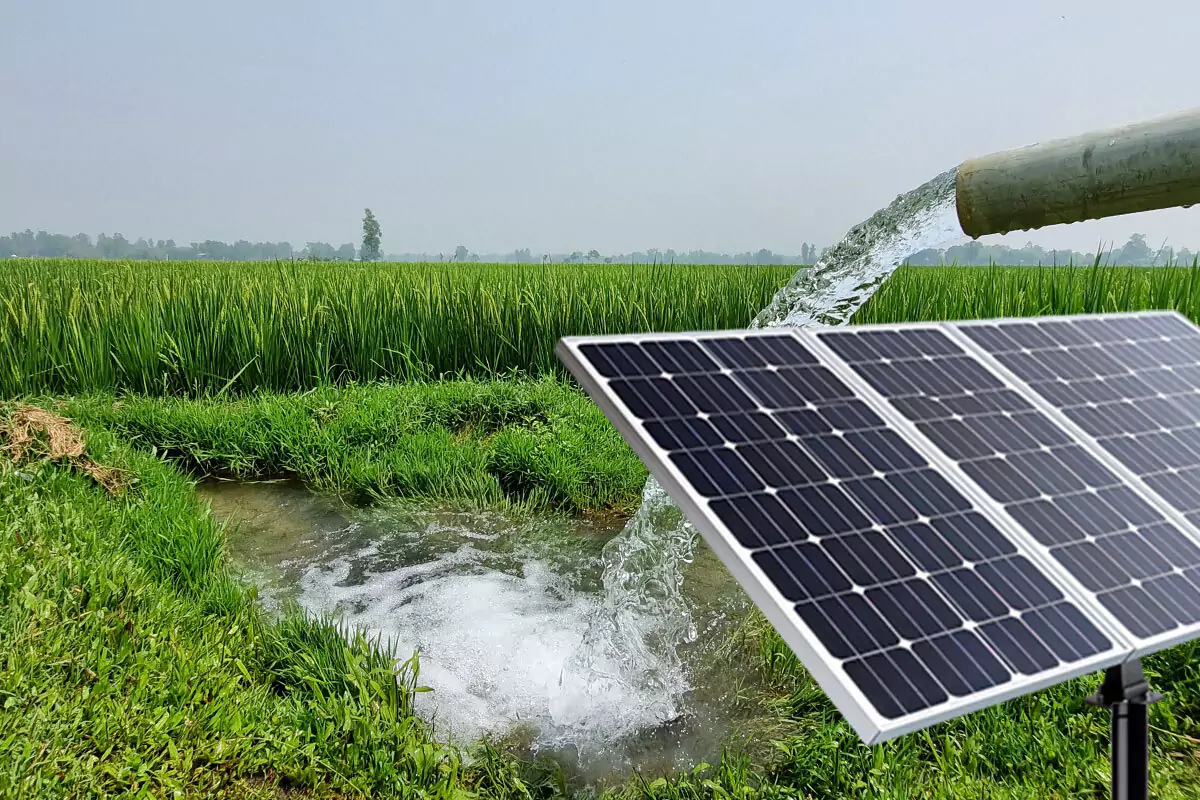
A Solar Water Pumping System is an efficient and eco-friendly solution designed to pump water using solar energy. It operates by converting sunlight into electricity through solar panels, which powers the water pump without relying on conventional electricity or diesel.
This system is widely used for agricultural irrigation, drinking water supply, livestock watering, and industrial applications. It reduces operational costs and ensures a reliable water supply even in remote areas where electricity is limited or unavailable.
Types of Solar Water Pumping Systems:
1. Solar Submersible Pumps
2. Solar Open Well Pumps
3. Solar Monoblock Pumps
4. Solar AC/DC Water Pumping Systems
The solar panels capture sunlight and convert it into Direct Current (DC) electricity. This electricity is either directly supplied to the pump or passed through a controller/inverter to regulate the power.
The pump then draws water from sources like borewells, rivers, or tanks and delivers it for irrigation, storage, or daily use. The system operates efficiently during daylight hours and can be integrated with storage tanks for continuous water supply.
Solar Panels – Convert sunlight into electricity.
Solar Pump – Pumps water using solar energy (submersible or surface type).
Controller/Inverter – Regulates voltage and ensures efficient operation.
Mounting Structure – Holds solar panels securely.
Piping & Storage System – Transfers and stores water for later use.
✔ Eco-Friendly & Pollution-Free Operation
✔ Low Operating & Maintenance Cost
✔ Highly Durable & Long Life
✔ Automatic Operation with Minimal Supervision
✔ Suitable for Remote & Rural Areas
✔ Inbuilt Protection System for Safety
Agriculture Irrigation – Efficient water supply for farms and crops.
Drinking Water Supply – Ideal for villages and rural areas.
Industrial Use – Water supply for factories and industries.
Livestock Watering – Reliable water source for animals.
Institutions – Used in schools, hospitals, and public facilities.

No need for diesel or electricity, reducing operational expenses.

One-time investment with long-term savings.

Consistent water supply during sunny hours.

Reduces carbon emissions and supports green energy.

Minimal servicing required compared to traditional pumps.

Eligible for subsidies under various solar schemes.
